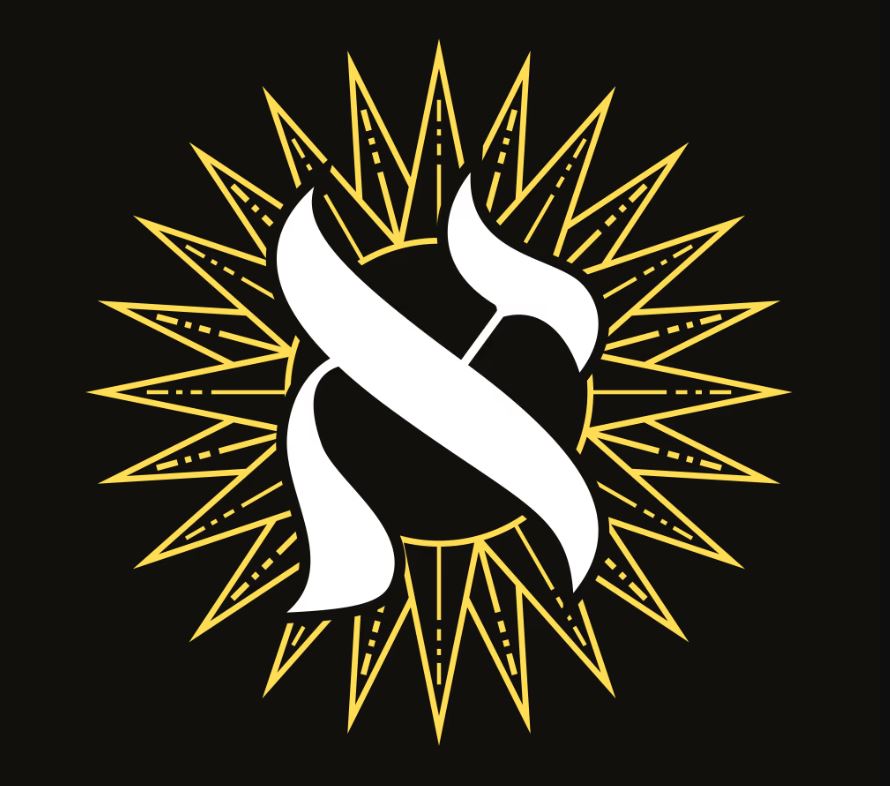
When we speak about Avrohom Avinu as the first Jew, we are doing more than stating a historical fact. We are saying that he was the first human being to step into the world carrying a Yiddishe Neshama, a Jewish soul. Once a person has such a soul, he or she is a Yid. That truth is simple and complete. Yet it also prompts an urgent question. What does it really mean? What is different inside a Jew?
Rather than beginning with philosophy, history, or even emotion, it is helpful to turn to something remarkably simple. A single Hebrew letter. The Aleph. Inside that letter rests the entire identity of a Yid.
There is a story from the Alter Rebbe that serves as the introduction to this idea. He once summoned a young disciple of the Maggid and said to him in his normal chant, “I have the mitzvah of ‘teach them to your children.’ You have the mitzvah of sustaining and providing for your family. Let us make an exchange. I will give you what you need to fulfill your mitzvah, and you will teach my son” – who would later become the Mitteler Rebbe.
The Alter Rebbe went on to explain: the tradition of Jewish education for generations began with teaching children letters and vowels. Kumatz Aleph, Uh. It was never a mere exercise in literacy but an act of instilling holiness. The child was not merely learning to read. The child was being introduced to the sanctity within every letter, every vowel, every symbol. The first thing is to teach the letters, aleph, beis, and so on. What is an aleph? Aleph is formed with a Yud above representing Hashem, a Yid below representing the Jewish soul, and a Vov that connects them through faith and inner work.
This theme continues in the connection between the words Yehudi, Yid, and Yud. The association is intentional. A Jew is linked to the smallest Hebrew letter. The Yud makes itself small. In the language of Chassidus, this is expressed as אֲזַעִירַת גַּרְמָה. The letter retreats inward. The smaller it becomes, the more authentically it expresses what it is – a dot. Its power is not in occupying space but in revealing its essence. That, too, is the nature of the Nefesh HaElokis, the G-dly soul of each Yid. It is always able to go a step deeper.
To be a Jew means that one can always take a step back, a step inward, to discover something deeper. By receding into the inner space of authenticity, a Jew becomes more herself, more himself.
How does this help us in our daily lives? The reality of existence is marked by duality. Duality creates tension. Being two is not easy. Adam and Chava struggled with it. Kayin and Hevel struggled with it. Eight billion people walk the earth today struggling to coexist, and still the greatest challenge may be the experience of simply being alone with oneself and contending with the many opposing internal forces.
It is important to note that this struggle never disappears. Even when Moshiach is revealed and the world is filled with clarity, we will still live in dual relationship: us and Hashem, us and one another. The goal is not to become one by dissolving individuality. The task is to learn how to live as two while remaining in continuous relationship. To practice duality rather than fight it.
There is another story of the Alter Rebbe that opens this idea. Once, as he was leaving his room, he overheard his wife speaking with other women and she referred to him as “mainer zogt”, which means “mine says.” The Alter Rebbe took this not only as a comment about marriage, but as a teaching about life. It revealed something essential about how a Jew relates to the world and to Hashem. We often assume that the defining word of a relationship is love. In truth, it is mine. Everything that comes into my life carries the message that this is mine to engage with, mine to grow through, and mine to use in my relationship with Hashem.
Everything that a spouse is, says, or does becomes mine to embrace, mine to grow from, mine to connect with and connect through. This applies to every aspect of our lives as well. The dualities and tensions that arise throughout the day are not things to resist or treat as an interference. They may feel that way at first. The work of the soul is to take a step back, to become a Yud, to access the deeper part of ourselves that says, this is mine. This is what Hashem is giving me now. This is part of my mission and part of my relationship with Him and with myself.
This provides an insight into G-d’s seminal command to Avrohom Avinu: Lech Lecha. The word lecha, literally translated, means “yours.” We are instructed to go inward until we can see that the experience is ours, but it is not us. We remain a step deeper. Always a step deeper.
In psychological language, this may be expressed as the idea that there are no bad parts. The world around us, and our inner world, can feel like a battleground of conflicting forces and many bad parts. The work of the Jew is to respond like the Yud: to recede inward rather than become enmeshed in the feeling or the struggle. Instead of saying this is me and I am overwhelmed, we take a step back and say this is mine and I can handle it. This is something Hashem has placed in my life for me to face, to hold, and to grow through. From that inner place, the experience becomes something I can integrate rather than fear. It becomes another point along the Vov of faith and inner work that connects the Yid below to the Yud above.
In the story related earlier about the mitzvah exchange between the Alter Rebbe and the young teacher, the directive to educate a child contains another layer of meaning. The mitzvah of raising and educating a child is not to be viewed as yet another burden or problem. Rather, it is mine, given to me to embrace with love, humility, resilience, strength, and moral courage. If it becomes difficult, the work is to become a Yud, to step inward, to access the place that approaches it with faith, joy, and connection. The same is true in providing for a family. It is not simply an increasing pressure or a disruption to my inner peace. It is mine. When it begins to feel heavy, the Jew returns to his inner essence, adopts the perspective of the Yud, and moves back into trust and connection.
This is Lech Lecha. Torah tells us that the experience is “yours,” and the inner work is to go deep enough to truly claim it and say, this is mine.
To be a Jew is to know that whatever life brings next, whatever challenge, feeling, or responsibility arises, I can take a step back and say, this is mine. I am the Yud. Hashem is the Yud. My life is the Vov that connects us. That is the journey of the first Yid, Avrohom Avinu. That is what it means to live as a Jew.